
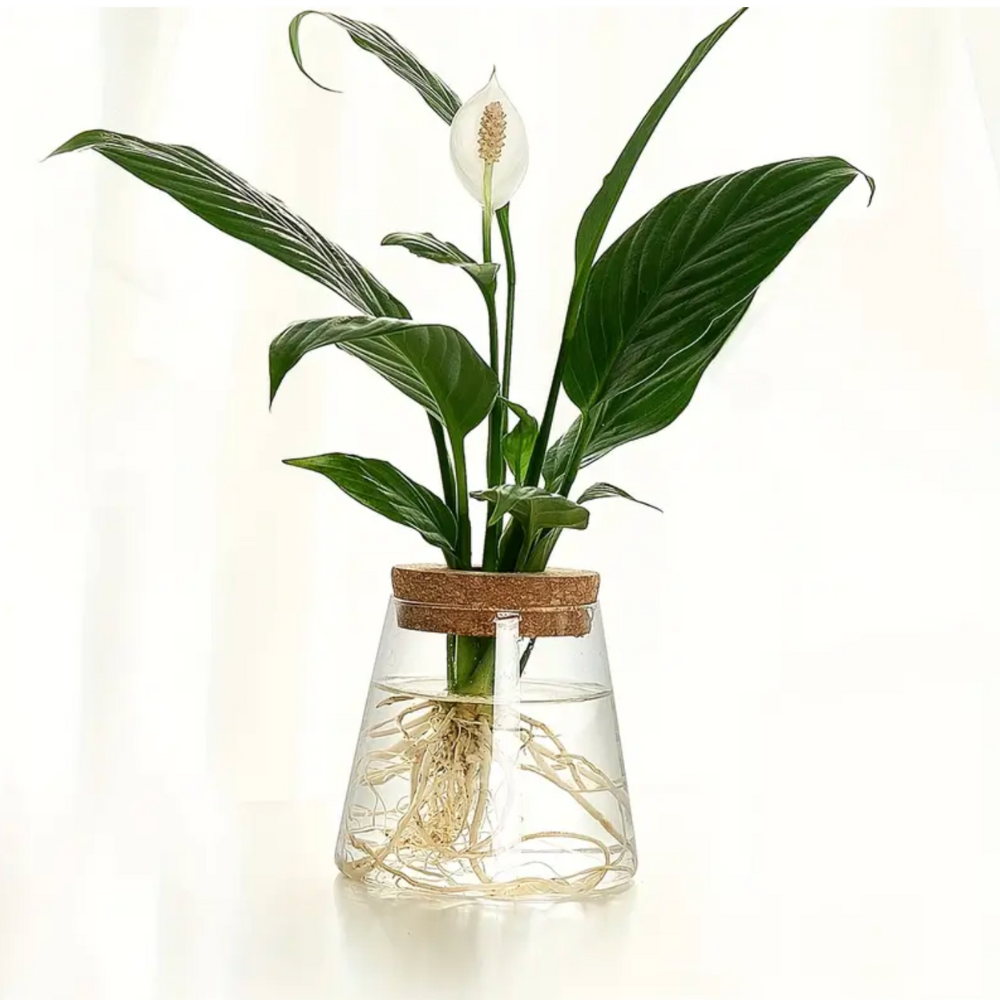
Glass Hydroponic Vase with Cork Lid for Houseplants and Cuttings
 Free shipping across Australia
 Bundle Deal: 10% off 2 items, 15% off 3+ items
The plant you view from root to leaf
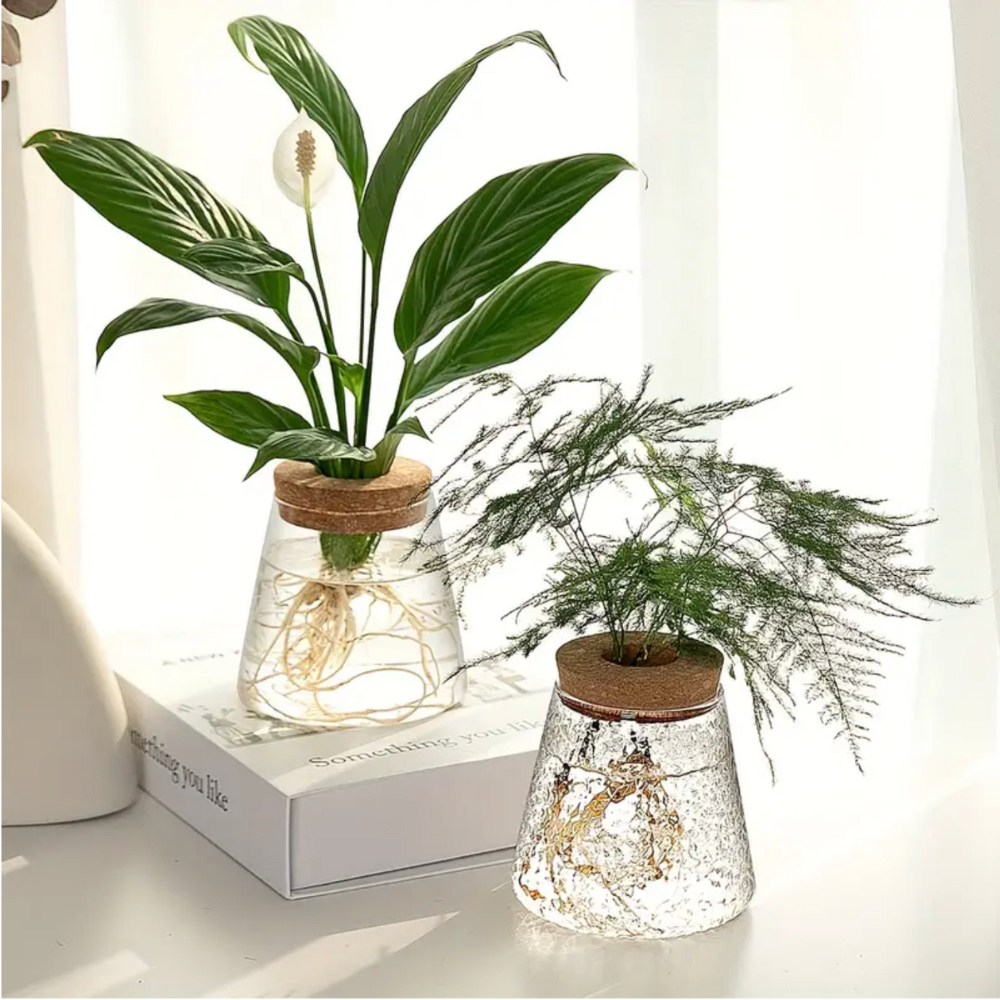
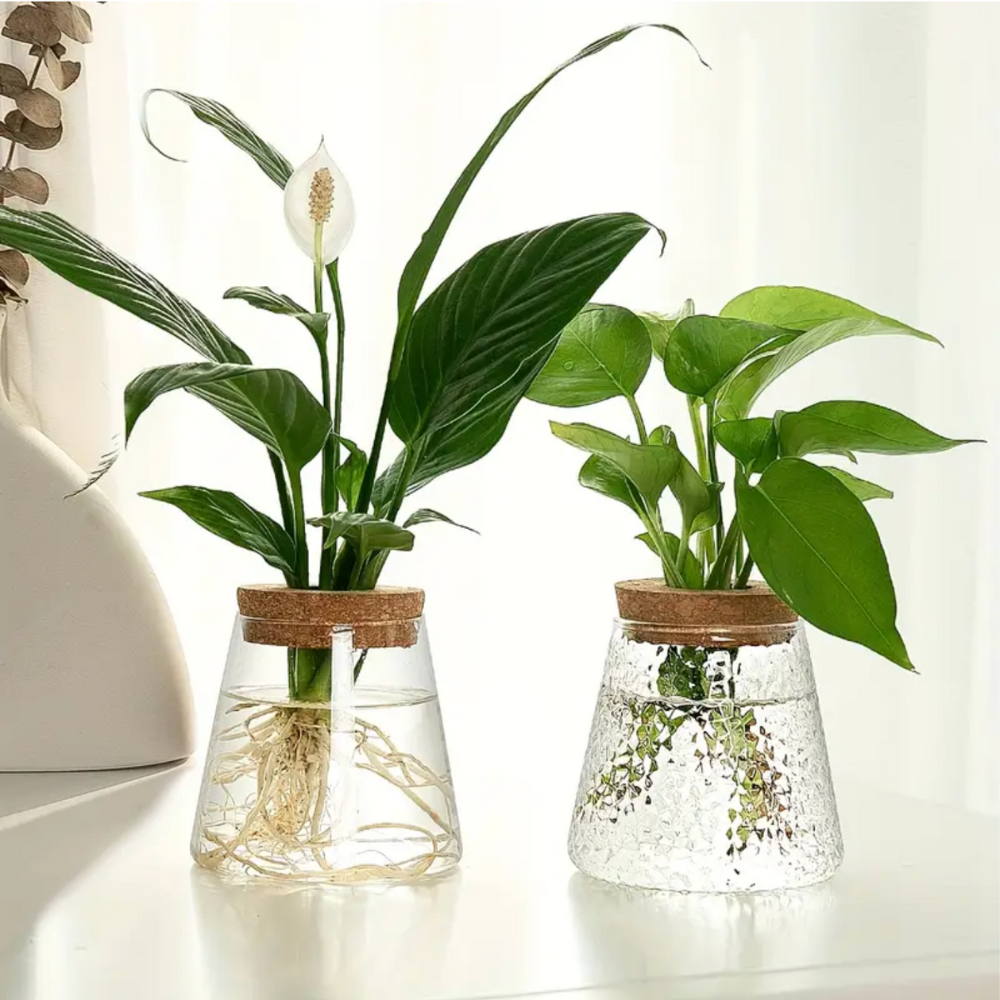
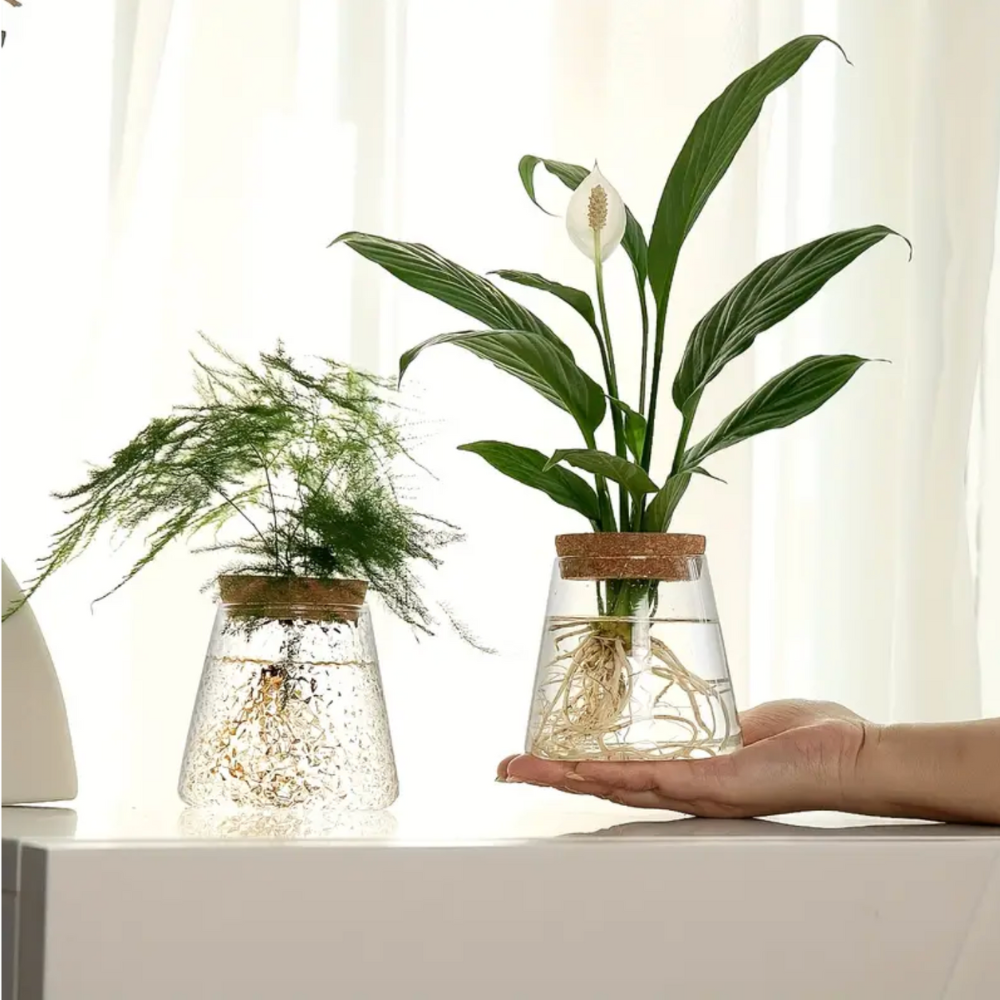
Traditional plant pots hide the most interesting part: the roots form the structure that supports the entire plant, but disappear invisibly in dark soil. Hydroponics reverses that. This glass vase shows the plant as it feeds itself — with the fine white roots unfolding in clear water, a living architectural element that subtly changes every day. The cork lid with a central hole keeps the plant stem upright while the roots hang freely in the water: a growing system without soil, without mess, without rot.
What sets this hydroponic vase apart from a standard glass jar
- Cork lid with central plant hole — the lid supports the plant stem at the transition between water and air, preventing the plant from sinking into the vase or the roots from growing out of the water toward light instead of down for nourishment.
- Conical shape for water stability — the wider base keeps the vase stable on windowsills and side tables filled with water, while the narrower top opening slows evaporation and limits refilling frequency to once every week or two.
- Clear glass for root observation — the transparent material makes the development of the root system visible from day one, adding both a visually engaging element to the space and an indication of plant health without disturbing the plant.
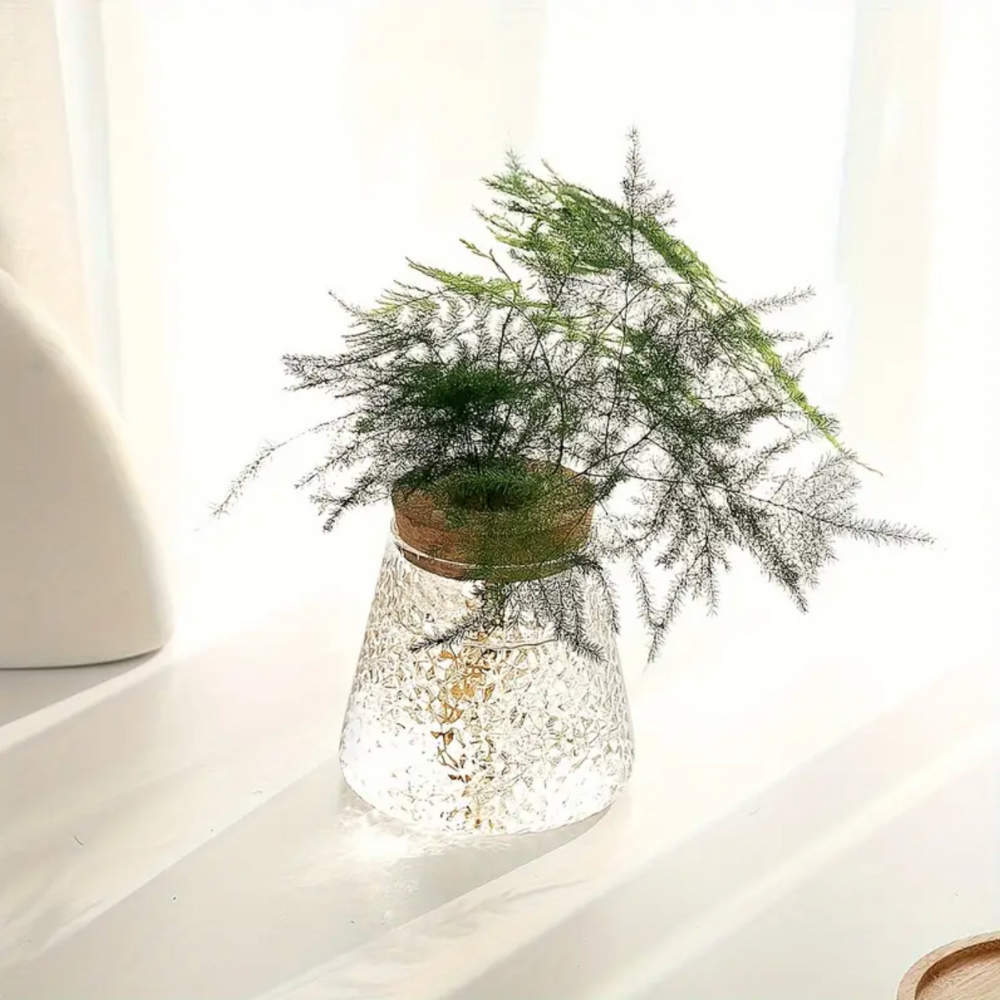
- Compact size for small plants — the dimensions are tailored for cuttings, baby plants, and compact species like peace lily or asparagus, making the vase suitable for windowsills, desks, and places where a larger soil pot would be out of proportion.
- Cork material to prevent algae growth — the natural cork blocks direct sunlight on the water inside, which prevents the formation of green algae on the water surface that typically appears within weeks in open transparent vases.
- Low-maintenance growing system — no soil means no fruit flies, no mold on substrate, and no scattered potting soil when moving, making the vase suitable for living rooms, bedrooms, and workspaces where a traditional plant would be visually or practically inconvenient.
Suitable for beginner plant caretakers who want to switch to living greenery without the learning curve of watering schedules and moisture meters, for plant lovers who want to propagate and watch new roots develop into a full plant, and for apartment dwellers with limited space who want to keep plants without storing bags of potting soil. Also great for families with young children curious about how plants grow — the visible roots provide a daily biology lesson — and for office workers who want a living element on their desk without daily maintenance.
Which plants work in hydroponics and how do you care for the water?
A common question with hydroponic vases: which plants survive without soil? Most plants that root easily in water — peace lily (spathiphyllum), pothos, philodendron, monstera cuttings, dracaena, and certain ferns — thrive well on a hydroponic basis as long as you replace the water regularly. Fill the vase three-quarters full with room temperature water (tap water left overnight to let chlorine escape), place the cork lid, and slide the plant stem through the central hole so the roots hang in the water. Change the water every one to two weeks, or sooner if the water becomes cloudy or smelly. Add a few drops of liquid hydroponic fertilizer every few weeks (available at garden centers) to replenish nutrients normally provided by soil. For vase maintenance: clean the glass periodically with a bottle brush and lukewarm water without soap residue; avoid soap or cleaning agents in the vase as residue can damage plant roots. Place the vase in indirect daylight — direct sun accelerates algae growth and can make the water too warm for the roots.
For people who want to see plants alive instead of just having them in the room.
Shipping Information
At Veverra, you always enjoy free shipping. Not completely satisfied with your purchase? You can return your product within 30 days. Feel free to contact us for assistance with your return.
30-Day Hassle-Free Returns
Not happy with your order? No worries! At Veverra, you have 30 days to return your order without any hassle. We ensure a smooth and problem-free shopping experience, so you can always shop with confidence.